Buying a gemstone necklace online asks for a small act of faith. You cannot lift the pendant to a window, feel the weight of the chain or test whether the clasp is the fiddly sort that needs two hands and good light. What you can do is ask better questions and read the listing the way a jeweller would. Most disappointments trace back to a handful of details: length, weight, setting, metal, and what happens if you want to send it back. Work through the checks below and you will know whether you are looking at something you will wear for years or something that will sit in its box.
Start with the Measurements
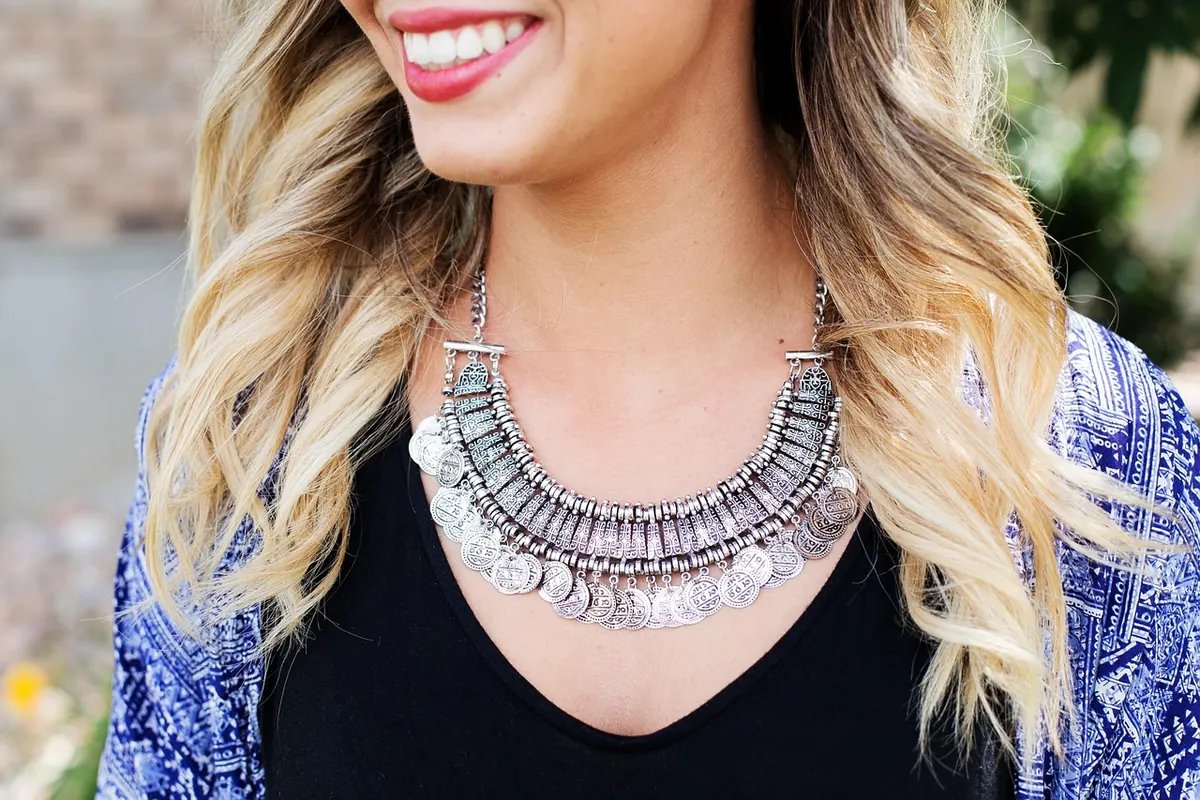
Before you compare stones, decide where the necklace should sit. Lengths are usually given in centimetres or inches, and the gap between 40cm and 45cm is the gap between a chain resting at the base of the throat and a pendant falling well below the collarbone. As a rough guide, 35–40cm sits at the throat, 42–45cm at the collarbone, 50cm a touch lower, 55–60cm works over a fine jumper, and anything from 75cm upwards is opera length.
Measure a necklace you already wear well, flat on a table, and compare. A piece of string against a mirror does the job too. Then look for the pendant measurements: overall drop from the top of the bail to the lowest point of the stone, stone dimensions in millimetres, and chain width in millimetres. A 0.8mm chain looks delicate; 1.5–2mm reads as substantial. Total weight in grams tells you more than a photo ever will. Remember that carat weight describes a stone's mass, not its width — a dense stone can look smaller than a lighter one of the same carat count.
Examine the Chain and Clasp
The chain is not an accessory to the pendant; it is what keeps it on your neck. Heavy pendants need a heavier chain, otherwise the links stretch, the pendant twists and the clasp takes strain it was never made for. Ask what the chain is made of, what type it is and how wide.
- Cable: simple oval links, reliable and easy to repair.
- Curb and trace: flattened or angled links; curb feels heavier, trace lighter.
- Rolo: round links, good with chunky pendants.
- Box and snake: smooth and sleek, but prone to kinks and dents.
- Rope, wheat and Singapore: twisted or woven, catching light nicely and hiding wear well.
- Bead and figure-of-eight: decorative, slightly more snag-prone.
Clasps matter just as much. Spring rings suit fine chains but open easily. Lobster claws are the secure everyday standard. Toggle clasps are attractive but can work loose with a heavy pendant, and magnetic clasps are best kept for lightweight pieces. Check that any jump rings are soldered rather than simply bent shut, and that the chain ends are finished, not left rough.
Read the Setting, Not Just the Sparkle
A well-set stone stays put through years of jumpers, seatbelts and scarves. A poorly set one loosens, catches on knitwear and eventually disappears down a drain. Ask how the stone is held and how many claws are used — four claws show more of the stone, six hold it more securely.
What each setting means for daily wear
A bezel setting wraps metal around the edge of the stone. It protects well and never snags, which makes it ideal for a necklace worn constantly, though it hides a little of the stone's outline. Claw settings show the gem at its best and let light pass underneath. Halos add sparkle and width but give more edges to catch. Pavé looks wonderful and needs gentle handling. Tension settings rely on the metal alone, so they suit hard stones rather than soft ones. Wire-wrapped settings are often handmade and worth a close look at the finish.
Also check whether the back of the setting is open or closed. An open back lets light through, which flatters coloured stones; a closed back protects skin and clothing but can trap moisture. Finally, make sure the bail opening is wider than the chain, and find out whether the pendant slides freely or is fixed. Fixed bails stop a pendant drifting off-centre but can make the chain twist.
Hallmarks, Metals and Honest Descriptions
In the UK, precious metal items above set weights — gold over 1 gram, silver over 7.5 grams, platinum over 0.5 grams — must carry a hallmark. A full hallmark includes the maker's or sponsor's mark, the assay office mark and a fineness mark: 375 for 9ct gold, 585 for 14ct, 750 for 18ct, 916 for 22ct and 925 for sterling silver. Ask for a close-up photograph of it. If a piece is below the weight threshold it may legally be unmarked, so ask for the metal to be confirmed in writing.
Plated jewellery needs reading carefully. Gold plating, gold filled and vermeil all describe gold over another metal, and they wear differently. Plating can fade with daily wear, so know what you are buying before you fall for it.
Gemstone descriptions deserve the same attention. A listing should tell you whether a stone is natural or lab-grown, treated or untreated, and what treatment was used — heating, oiling, dyeing, glass filling and fracture filling all change value and care. Lab-grown stones are genuine gems with the same chemistry, and are perfectly good purchases when described clearly and priced accordingly. Imitations and composites should be labelled as such. If the description is vague, ask directly and keep the reply.
Read the Photographs Like an Inspector
Good listings show the actual necklace from several angles: on a model or a hand for scale, in daylight, close enough to see the stone and the setting, and from behind so you can see how the pendant is finished. Look for a photograph of the hallmark. A short video is better than any still image, because it shows how the piece moves and how the stone behaves in changing light.
Be cautious with heavy colour saturation, pure white backgrounds that flatter every gem, and the phrase "representative image". Screen colour varies, so if the exact shade matters, ask for a daylight photograph of the piece you would receive. Check the images for clues as well as beauty: a chain photographed only at an angle may be thinner than it appears, and a pendant shown flat may hang quite differently once it is on.
Returns, Delivery and Aftercare
Read the returns policy before you add anything to the basket, and note the window, whether change of mind is covered, and which items are excluded. Bespoke, engraved, resized and made-to-order pieces are often final sale, and return postage is frequently the buyer's responsibility. Send returns tracked and insured, and pay in a way that offers some protection if the parcel goes missing. For delivery, choose a tracked, insured service for anything valuable, and check whether a signature is required. If the necklace is worth insuring, a written valuation from a qualified valuer will usually be needed — your insurer can confirm what they accept.
Care is simple but worth doing. Put jewellery on last and take it off first. Keep perfume, hairspray and chlorine away from stones and metal, store each piece in its own soft pouch so chains do not tangle, and wipe it with a soft cloth after wearing. Warm water with a drop of washing-up liquid and a soft brush suits many gems, but pearls, opals, emeralds, turquoise and amber are softer or more porous and dislike soaking, chemicals and ultrasonic cleaners. When in doubt, ask a jeweller.
The 11-Point Checklist Before You Pay
- The length matches a necklace you already wear comfortably.
- Pendant drop, stone size and chain width are given in millimetres.
- The chain is heavy enough for the pendant.
- The clasp is one you can fasten yourself, and jump rings are soldered.
- The setting protects the stone and will not snag your clothes.
- The metal is stated precisely: 9ct, 18ct, sterling silver, platinum or a named plating.
- The hallmark is present, or its absence is explained, and it has been photographed.
- The stone is described as natural or lab-grown, treated or untreated.
- The photographs show the actual piece, including the back and the hallmark.
- The returns window, exclusions and postage costs are clear.
- Delivery is tracked and insured for the value of the item.
If any of those eleven cannot be answered, ask before you buy rather than after. A seller who knows their stock will answer quickly and specifically — and that reply, kept in your messages, is often the most useful thing you own if something goes wrong.
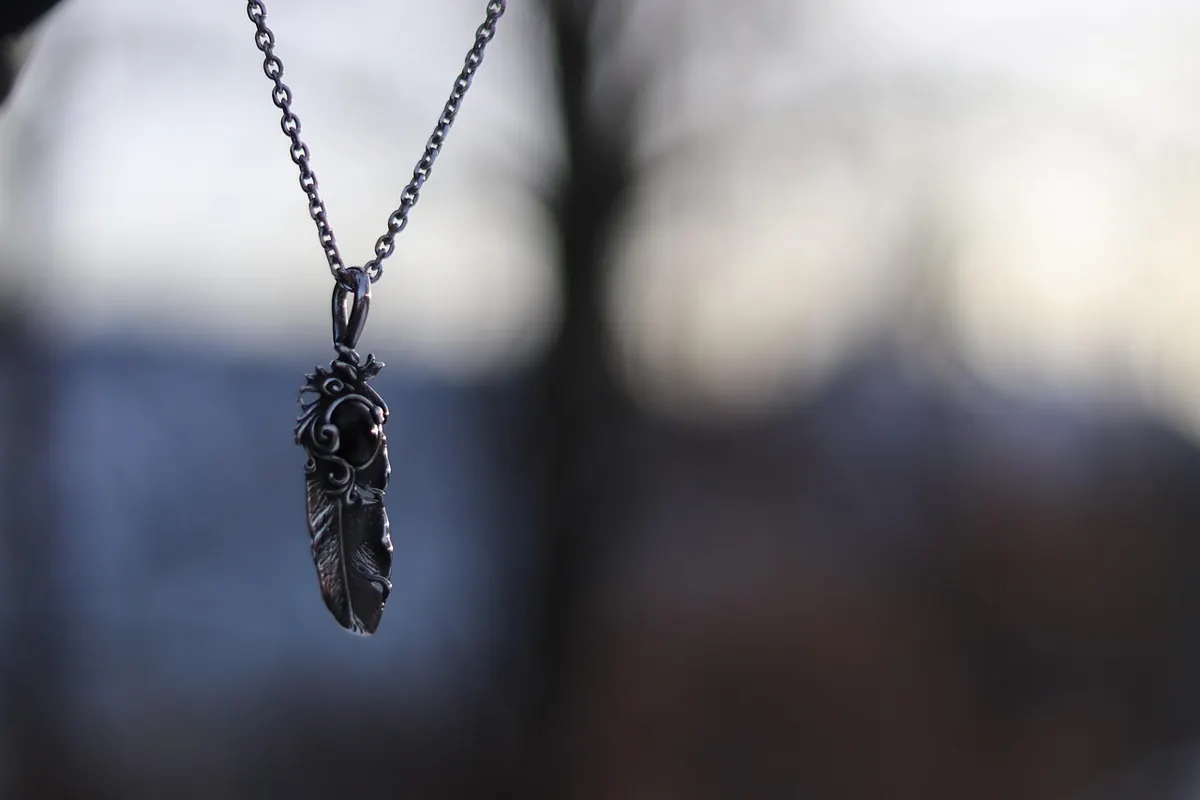
Photo: YakupIpek / Pixabay