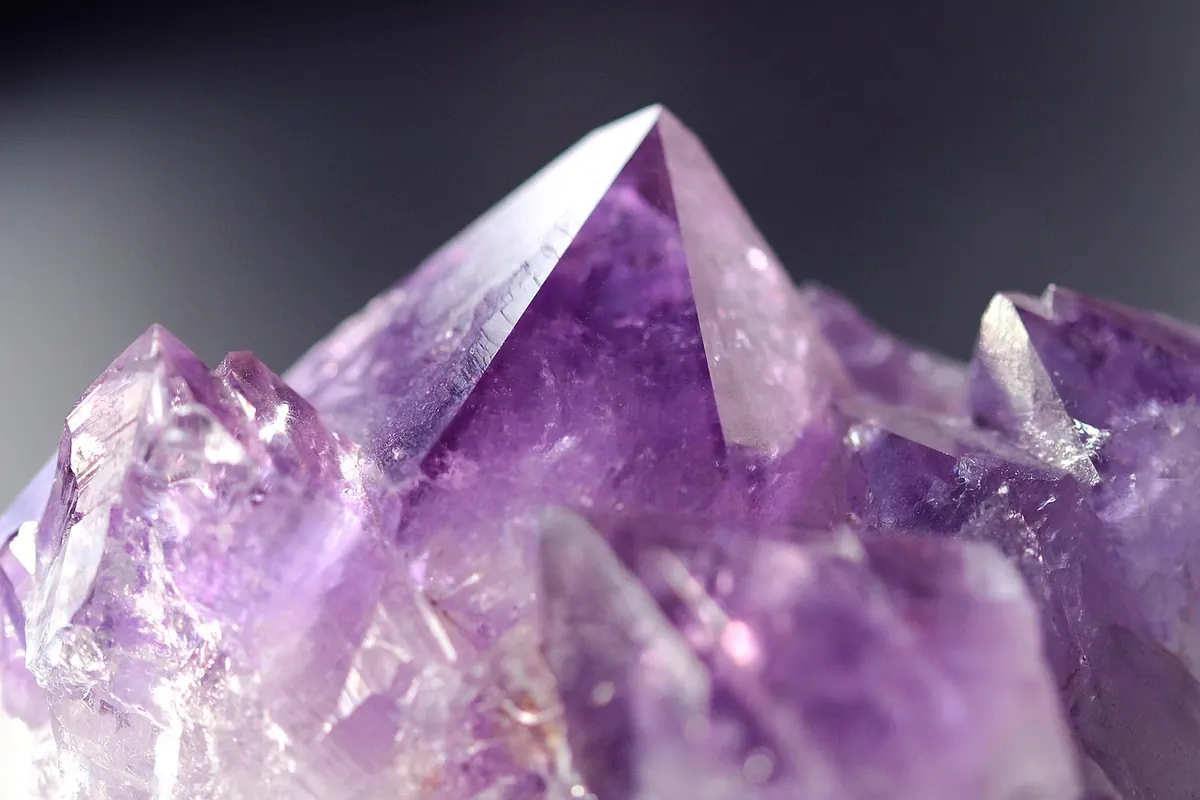
February asks a lot of a jewellery box. Valentine's Day lands in the middle of it, birthdays cluster around it, and the birthstone for the month sits right there as an obvious answer. Amethyst has spent years filed under "pretty but not thrilling", which is unfair. It runs from a pale, almost greyish lilac to a deep violet with genuine presence, and it works in settings that cost far less than most people expect. Choose the stone to suit the wearer rather than the calendar, and you will end up with something she actually wears in March.
Amethyst: the February birthstone, properly considered
Amethyst is quartz, which means it is durable enough for everyday wear at around 7 on the Mohs scale, but not indestructible. It scratches more easily than sapphire or diamond, so treat it as a ring to wear rather than a ring to abuse.
Colour is where the money goes. Good stones hold their tone evenly across the whole face, with no watery patch in the middle where the light passes straight through. Very pale material is often sold as "Rose de France", which suits anyone who finds deep purple too heavy. Deeper violet, sometimes called Siberian or Zambian in the trade, reads richer but can look almost black indoors.
Cut and shape
Brilliant cuts concentrate colour, so they flatter lighter stones. Step cuts, such as emerald or Asscher cuts, show off clarity and give a quieter, more architectural look. Ovals, marquise and pear shapes lengthen a short finger; a round or cushion cut is the safest bet if you are unsure.
Other romantic gemstones worth considering
Amethyst is not the only stone that suits a February proposal or a Valentine's gift. These are the ones I would look at first:
- Rose quartz — soft, milky pink and gentle on the eye. Best in a cabochon or a simple bezel, since it is not a hard stone and will show wear.
- Morganite — a peachy-pink beryl with good hardness and a warm glow in rose gold. It has become a popular engagement alternative to diamond.
- Pink tourmaline — more saturated and lively than morganite, and hard enough for regular wear. Deeper, raspberry-toned stones are the most prized.
- Rhodolite garnet — a purple-red garnet that bridges amethyst and ruby. Excellent value, and beautiful in yellow gold.
- Pink sapphire — the most hard-wearing option on this list, and priced accordingly. A good choice for someone who never takes her rings off.
- Moonstone — blue-white shimmer with a romantic, slightly antique feel. Softer, so better as an occasional ring than a daily one.
- Ruby or red garnet — the obvious Valentine's choice, and a strong one if she prefers warm colours to pink.
Metals and settings that flatter pink and purple
Rose gold is the natural partner for morganite and rose quartz; the warmth lifts the colour instead of fighting it. Amethyst looks sharp in white gold or platinum, where the contrast makes the purple read cooler and cleaner, and surprisingly rich in yellow gold if the stone is deep enough.
For settings, a solitaire with a four-claw mount shows the most stone for the money. A halo adds sparkle and perceived size. A trilogy ring, with a coloured stone flanked by two smaller white stones, is a neat way to mark an anniversary or a third Valentine's together. A toi et moi setting — two stones set side by side — works well if you want to combine a February birthstone with a partner's birthstone.
Stacking and layering
Birthstone stacking has quietly become more popular than the traditional single-stone ring. A slim amethyst band worn with a plain gold band and a thin diamond eternity ring looks considered rather than cluttered. Keep the bands to similar widths and pick one metal tone for the stack, or deliberately mix two if the wearer already does that with her other jewellery.
Matching the ring to the person
Before you buy, work through this in order:
- Look at what she already wears. If her watch, earrings and existing rings are all yellow gold, a white gold ring will sit unused in a drawer.
- Note the shapes she likes. Delicate and dainty, or bold and chunky? A 3mm band and a 6mm band read as completely different gifts.
- Check her colour preferences in clothing. Someone who lives in navy, grey and black will usually take to a cool purple or a pale pink. Someone in rust, cream and olive will suit garnet, morganite or a warm red.
- Decide how it will be worn. Everyday wear points to sapphire, spinel or a well-set amethyst. Occasional wear opens up moonstone, opal and pearl.
- Set a budget and hold to it. A smaller, well-cut stone in a well-made setting beats a large, badly cut one every time.
Sizing, surprises and returns
A ring is the one gift you cannot guess at. Borrow a ring she wears on the correct finger and take it to a jeweller to be measured, or use a ring sizer at home. If you are buying online, check the returns and resizing policy before you pay, and confirm whether resizing is free and how long it takes.
Think carefully about the style of the ring too. A gemstone ring in a halo setting can look very much like an engagement ring, which may or may not be the message you want to send on 14 February. If you are not proposing, a stacking band, a signet-style ring or a trilogy piece usually reads as a gift rather than a question.
In the UK, most gold, silver and platinum pieces above a set weight must carry an assay office hallmark. Look for it, and ask about the stone's treatment — heating is routine for amethyst and citrine, and oiling or filling is common in emeralds. Any reputable seller will tell you. For anything valuable, ask about a valuation for insurance, and take professional advice on your cover rather than guessing.
Looking after amethyst and softer stones
Clean amethyst, morganite and rose quartz with lukewarm water, a drop of washing-up liquid and a soft toothbrush, then dry with a lint-free cloth. Keep amethyst out of long, direct sunlight, as prolonged exposure can dull the colour. Skip the ultrasonic cleaner for opal, pearl, moonstone and turquoise, and store softer stones in their own pouch so they do not rub against harder pieces.
Take rings off before gardening, swimming, weight training or washing up. Chlorine and household cleaners are unkind to coloured stones and to the metal itself.
A short buying checklist
Know her metal tone, her preferred ring width and her size. Decide whether the ring is for daily wear or occasions, then let that guide the stone's hardness. Choose the cut before the carat weight. Ask about treatment and hallmarking. Check the returns policy in writing. Buy the ring you would be happy to see her wearing in five years, not the one that photographs best in the box, and February will take care of itself.
Photo: Dieter444 / Pixabay