A beautiful pair of earrings can still end up lost in a taxi, or left in a drawer because they pinch. Usually the fastening is to blame. Screw backs and butterfly backs are the two fittings you will meet most often in gemstone jewellery, and they behave very differently on the ear: one is designed to stay put through almost anything, the other to come off in a second. Knowing what each one does — and which suits the stones you actually own — makes buying and wearing far easier.
Butterfly backs: the everyday standard
Butterfly backs, also called friction backs or clutches, rely on two sprung metal plates inside a small curved body. Those plates grip the post by friction alone. You push the earring through your lobe, slide the back on until it sits snugly against the skin, and pull it off when you are done.
They are small, inexpensive and near-universal, which is why most gemstone studs arrive with a pair. For light earrings worn often — a set of 4 mm garnet studs, a small moonstone, a simple pearl — they are perfectly adequate.
The weakness is wear. Sprung plates lose tension over time, and a back that once gripped firmly starts to slide. It tends to happen gradually, which is why earrings are so often lost one at a time rather than in pairs. If a butterfly back feels loose, you can usually squeeze the plates gently with flat-nosed pliers to restore a little grip. Work in small increments and test after each squeeze.
Screw backs: security for heavier and more valuable pieces
A screw back is exactly what it sounds like. The post carries a fine thread, and the back screws onto it — usually a small knurled nut or ball that turns three or four times. Some designs use a fixed decorative back with a tiny separate locking screw; others combine a butterfly-shaped body with a threaded collar.
What you gain is grip. A properly tightened screw back will not slide off when you pull a jumper over your head, take off a motorcycle helmet, or fall asleep on the sofa in your earrings. That makes it the sensible choice for heavier stones, larger drops, solid gold, heirlooms, and anything worn under a scarf or hat.
The trade-off is fiddliness. Threading a small nut onto a post behind your ear takes practice, especially with long nails or limited feeling in your fingertips. Screw backs also need checking — a nut that is only half-tight will work its way loose over a day. Keep the threads clean, too; grit or dried polishing compound makes them grind and encourages them to back off.
One note on the name: “screw back” is also used for earrings made for unpierced ears, where a small screw clamps the lobe. Those are a different piece of engineering altogether, so check the description before you buy.
Comfort, weight and how they sit on the ear
A butterfly back sits flat against the lobe. On a light stud that is barely noticeable. On something heavy, the weight hangs on the front of the lobe while the small back offers little counterbalance, so the earring tilts forward and the post presses into the skin. Very long posts make this worse.
Screw backs generally use a larger, heavier back that sits a few millimetres away from the ear. That back acts as a counterweight and keeps the earring hanging more upright. The small gap also lets a little air circulate, which some people find more comfortable over a long day.
If your ears are sensitive, the metal matters more than the mechanism. Titanium, surgical stainless steel and nickel-free gold are the usual starting points. If your lobes itch, weep or swell, take the earrings out and speak to a pharmacist or doctor rather than persevering.
Other earring fittings worth knowing
- Bullet backs: a longer cylindrical clutch with more internal grip than a butterfly. Slightly more visible, but harder to knock loose.
- Lever backs: a hinged lever closes the hook on itself so the earring cannot slip out. A favourite on fine gold drops.
- Omega backs: a curved, sprung back that spreads pressure across a wider area. Common on clip-on earrings and larger designs for unpierced ears.
- Threadless backs: a slightly bent pin pushed into a hollow post, held by tension. Popular in titanium studs and easy to remove once you know the trick.
- French wire hooks: an open hook, quick to put on and quick to lose. A small silicone safety coil stops most accidents.
- Kidney wires: a hooked shape that resists slipping off the lobe, often seen on drop earrings.
- Hinged huggies and sleeper hoops: a click closure that sits close to the ear; secure, but they must be the right diameter for your lobe.
- Clip-ons and magnetic backs: the route for unpierced ears. Magnetic fittings work best on lighter earrings; the stronger the magnet, the less comfortable they become.
Choosing between them
Most earring boxes end up holding a mix, and that is fine. Use these as rules of thumb:
- Light studs worn most days: butterfly backs are quick, discreet and inexpensive to replace.
- Heavier stones, gold, or anything with sentimental value: screw backs or locking backs.
- Earrings you change two or three times a day: butterfly or threadless backs, which come off in a second.
- Earrings you put on and forget about: screw backs, checked and tightened properly.
Most standard earring posts measure around 0.8 mm, which is why backs from different pairs often fit each other. That is useful for spares, but never force a screw back onto an unthreaded post — you will strip the fitting and damage the earring.
Caring for your fastenings
Fastenings are the hardest-working part of any earring and the cheapest to replace, so treat them as consumables. Keep a few spare pairs of butterfly and silicone backs in your jewellery box. Check screw threads every month or so and tighten them before you go out. Clean backs in warm water with a drop of washing-up liquid, rinse, and dry them completely before storing — trapped moisture and soap residue are what turn threads gritty.
When you take earrings off, put the backs on the posts and the pair in a small pouch or compartment rather than loose in a dish. If a back is lost, replace it before the earring goes back into rotation; a post rattling around a drawer is one bent thread away from being unusable. And if you wear earrings daily, give the fittings a proper look once in a while — a two-minute check is far less painful than losing half a pair you love.
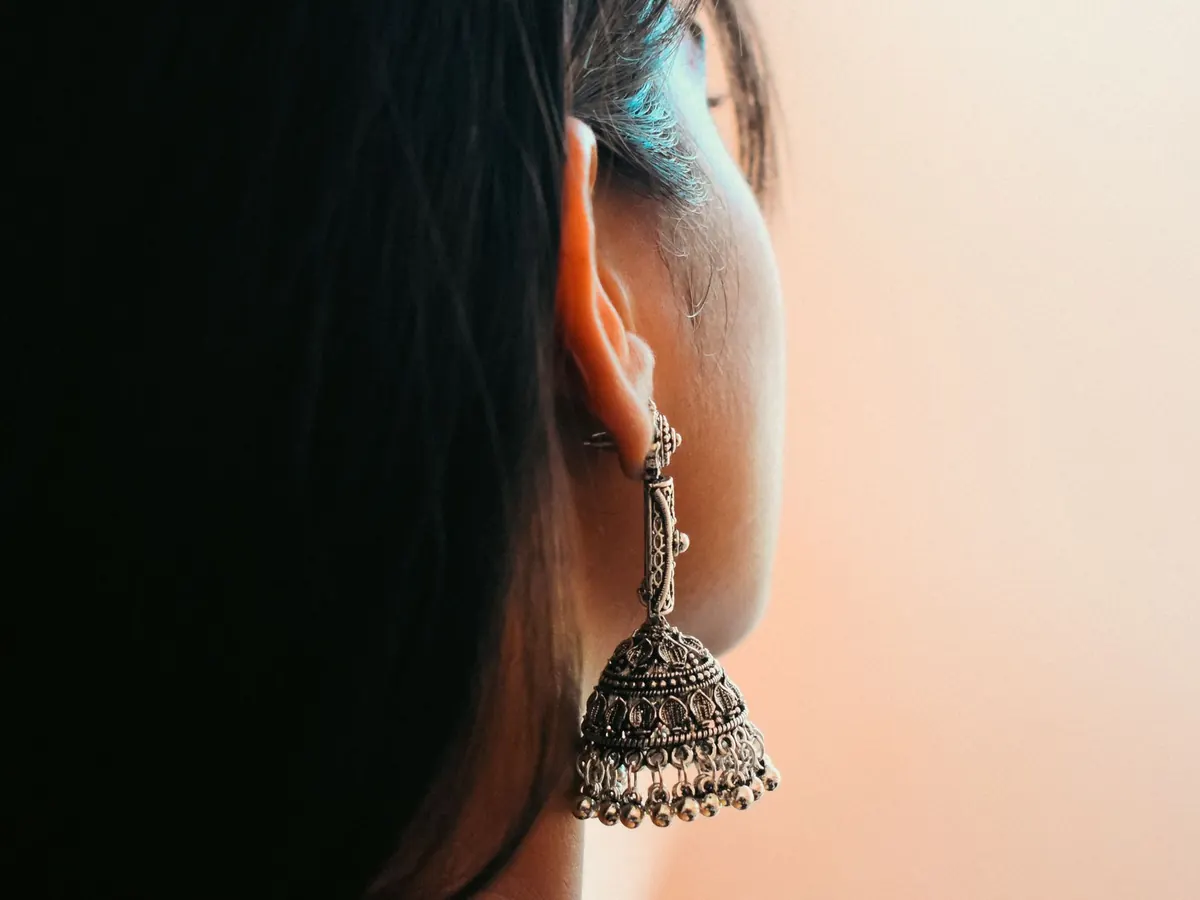
Photo: Raj Pritam / Pexels